
Every time you start your car, advanced vehicle safety technology is quietly working to keep you safe. From automatic braking to artificial intelligence, modern vehicles are engineered to detect hazards and prevent accidents before they happen. These systems save lives, lower insurance costs, and redefine the way we approach driving safety.
The Mike Slocumb Law Firm stands beside accident victims across the United States, helping them understand how technology affects liability and how to pursue compensation when things go wrong.
Key Takeaways
- Vehicle safety technology dramatically reduces crashes and injuries.
- Artificial intelligence and smart infrastructure are key to future prevention.
- Consumer education ensures technology is used responsibly.
- Legal guidance protects victims when safety systems fail.
- The Mike Slocumb Law Firm stands ready to help injured drivers seek justice and compensation.
Advancements in Safety Tech
In the past decade, automakers have transformed vehicles into high-tech safety platforms. Some of the most impactful innovations include:
- Automatic Emergency Braking (AEB) and Forward Collision Warning, which detect obstacles and stop the car when a crash is imminent.
- Lane Keeping Assist (LKA) and Blind-Spot Monitoring, which alert drivers to drift or unseen vehicles.
- Adaptive Cruise Control (ACC) maintains safe distances automatically, easing fatigue on long trips.
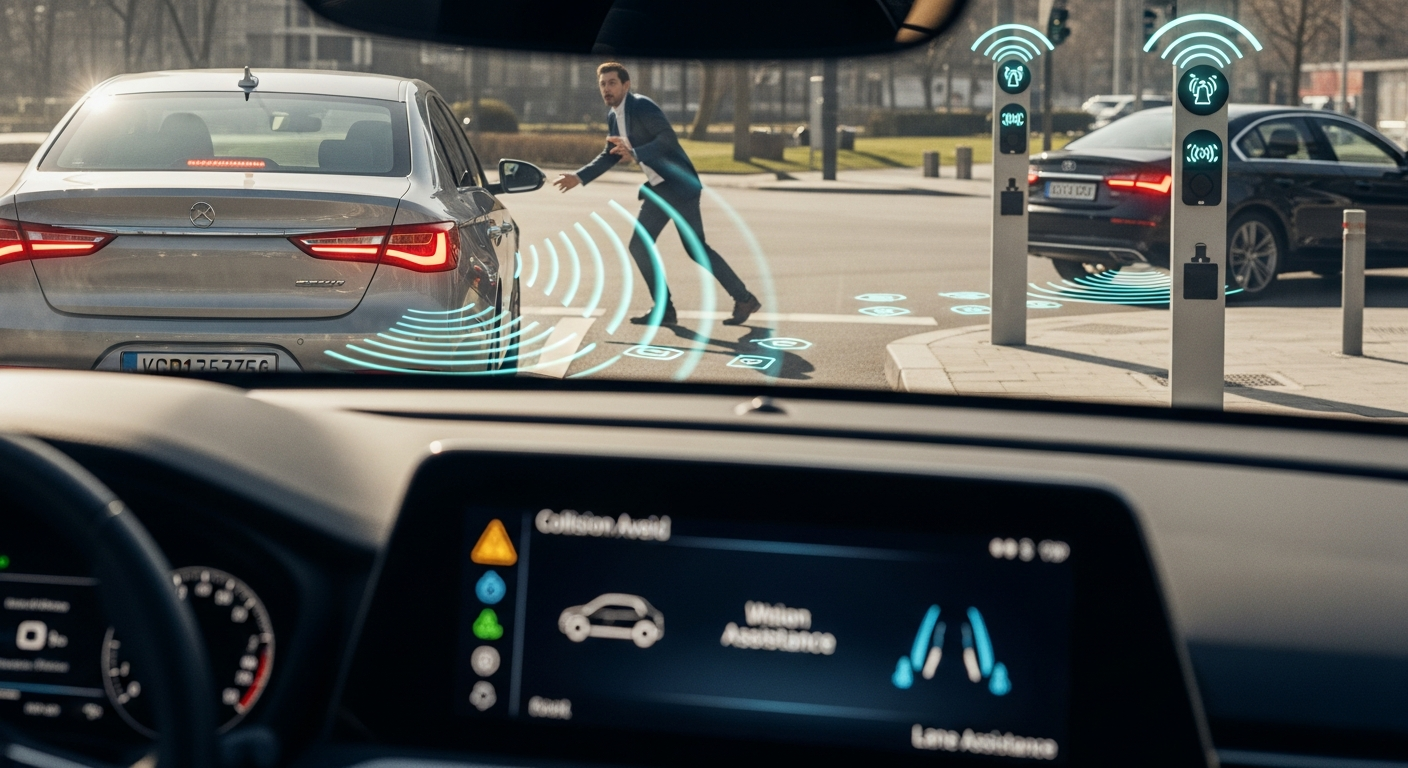
Advanced vehicle safety technology automatically prevents a collision and supports safer driving decisions.
Today’s vehicles also rely on sensor-fusion technology, combining radar, lidar, ultrasonic sensors, and cameras to give a 360-degree awareness of the road. This collaboration allows the car to recognize pedestrians, cyclists, and vehicles in all weather conditions.
According to the National Highway Traffic Safety Administration (NHTSA), AEB will become standard on all new light vehicles by 2029, a rule expected to save 360 lives and prevent 24,000 injuries each year. This federal step signals a future where accident prevention is built into every car rather than reserved for luxury models.
Effectiveness of Modern Safety Features
Safety technology delivers measurable results. The Insurance Institute for Highway Safety (IIHS) found that vehicles with rear automatic braking experience 78 percent fewer backing crashes, while forward-collision warning and AEB together can reduce rear-end accidents by half.
International research supports these findings. Euro NCAP data shows that vehicles produced after 2015 with complete safety packages are 40 percent less likely to be involved in serious collisions than older models. Simple upgrades, such as rear cross-traffic alerts and adaptive headlights, continue to reduce low-speed and nighttime crashes that once seemed unavoidable.
Technology, however, is only as effective as the driver who uses it. Safety features are aids, not replacements, for responsible driving and situational awareness.
Insurance Discounts and Financial Incentives
Insurers have noticed the value of safer vehicles. Cars equipped with AEB, Electronic Stability Control (ESC), or adaptive headlights frequently qualify for premium discounts. The National Association of Insurance Commissioners (NAIC) estimates savings of 5 to 10 percent for drivers who own vehicles with these technologies.
These incentives encourage consumers to choose vehicles with enhanced safety packages and reward them for doing so. Drivers can further reduce costs by maintaining clean driving records and ensuring safety systems are serviced regularly.
In the long term, as more advanced features become standard, insurers expect nationwide claim rates to drop, a win for both companies and policyholders.
Consumer Awareness and Education
Despite impressive advancements, many drivers still struggle to understand how these systems work. The AAA Foundation for Traffic Safety found that one in four drivers misinterprets the purpose or limits of Advanced Driver Assistance Systems (ADAS). For example, some believe that lane-keeping assist replaces steering control, a misconception that can lead to serious accidents.
Public education remains a key factor in accident prevention. Automakers and safety organizations are working to standardize the names and explanations of ADAS features so that drivers clearly understand what each function does.
Generational differences also play a role. Younger drivers tend to trust technology more, while older drivers may be hesitant to rely on it. Bridging this gap through demonstrations, training programs, and clear manuals helps ensure that every driver benefits equally from new safety tools.
Integration of Smart Infrastructure
Safety now extends beyond individual vehicles. Cities and states are integrating smart infrastructure that connects cars with roads, traffic signals, and pedestrian crossings. This network, called Vehicle-to-Everything (V2X), enables real-time communication between vehicles and the environment.
The U.S. Department of Transportation reports that V2X-equipped corridors experienced a 22 percent decline in property-damage-only crashes. Smart intersections use sensors and 5G connectivity to adjust signal timing and warn drivers of hazards.
These developments show how collaboration between public agencies and private automakers can make roads safer for everyone. Still, with increased connectivity comes the responsibility to safeguard driver privacy and secure vehicle data against cyber threats.
Artificial Intelligence and Predictive Safety
Artificial intelligence (AI) powers nearly every modern safety feature. By processing radar, camera, and lidar data in milliseconds, AI systems recognize patterns, predict hazards, and make split-second decisions that prevent crashes.
NHTSA data indicate that human error causes about 94 percent of traffic accidents. AI’s ability to analyze and learn from millions of driving scenarios can dramatically reduce this percentage. Some manufacturers now use over-the-air updates, allowing vehicles to improve safety performance without visiting a dealership.
AI also enables predictive analytics. If a specific road condition or behavior repeatedly triggers near-misses, systems worldwide can update to anticipate and avoid those risks. This global learning loop means that each vehicle helps make every other vehicle safer.
However, no AI can eliminate risk. Drivers must remain alert and ready to intervene. Trust in automation should never replace human attention; it should reinforce it.
Legal Implications of Vehicle Safety Technology
As vehicles grow smarter, legal questions become more complex. When automation fails, who is responsible: the driver, the manufacturer, or the software provider?
Courts are beginning to develop shared-liability frameworks that assign responsibility among all involved parties. Evidence such as maintenance records, software logs, and driver behavior data often plays a critical role in determining fault.
The Mike Slocumb Law Firm represents clients in cases involving defective safety systems and driver-assist malfunctions. Our attorneys combine deep legal knowledge with technical understanding to ensure that victims receive full and fair compensation.
As self-driving features expand, laws will continue to evolve to balance innovation, accountability, and consumer protection.
Future Trends in Safety Technology
The next decade promises breakthroughs that will further redefine road safety. Experts predict:
- Complete Integration of AI and 5G Networks: Vehicles communicating instantly with traffic lights, emergency vehicles, and each other.
- Biometric Driver Monitoring: Sensors that track eye movement, heart rate, and fatigue to prevent drowsy driving.
- Sustainable Safety Design: Electric vehicles integrating safety AI with eco-friendly efficiency.
- Autonomous Fleet Systems: Commercial fleets adopting shared AI platforms to reduce delivery-related crashes.
The NHTSA’s Automatic Emergency Braking Rule is only the beginning. As technology continues to advance, automakers, regulators, and legal advocates must work together to ensure that innovation serves both safety and justice.
Frequently Asked Questions
- Do advanced safety technologies prevent all crashes?
No. They significantly reduce risk but cannot control all conditions, such as weather, road quality, or unpredictable behavior from other drivers. - Can technology reduce my insurance premiums?
Yes. Many insurance companies provide discounts for cars equipped with AEB, ESC, and other proven safety systems. - Will self-driving vehicles make roads completely safe?
Not yet. Full automation is still in development, and human supervision remains essential for safety. - How can I use my car’s safety features correctly?
Read the owner’s manual, attend manufacturer demos if available, and keep sensors clean and calibrated. - What if a safety system fails and causes an accident?
You may have a legal claim against the automaker or technology provider. Seek advice from an experienced attorney immediately.
About Us
The Mike Slocumb Law Firm is a nationwide advocate for accident victims. Our attorneys understand how modern vehicle technologies affect liability, insurance claims, and compensation. With years of experience handling complex auto cases, we blend cutting-edge knowledge with compassionate client service.
Learn more about us to see how we protect injured drivers and their families.
Take the First Step Toward Legal Help
If you or a loved one was hurt in an accident involving modern vehicle technology, legal help is just a call away. We offer free consultations and work on a contingency basis; you pay nothing unless we win your case.
Contact us today to discuss your claim and learn how advanced safety systems may impact your rights and recovery.