
Following the right pedestrian safety tips is essential for residents in Alabama, Georgia, Washington DC, and Virginia to safely navigate their local communities. While walking is a healthy and environmentally friendly mode of transport, the risks remain high as traffic patterns and vehicle designs continue to evolve in 2026.
At Mike Slocumb Law Firm, we see the devastating aftermath of roadway negligence every day.
By understanding local traffic codes and adopting proactive habits, both walkers and motorists can work together to reduce the frequency of catastrophic accidents.
Pedestrian Right-of-Way: Key Takeaways
- Drivers in Georgia and D.C. must come to a full stop and remain stopped for pedestrians in both marked and unmarked crosswalks.
- The risk of serious injury increases significantly when the striking vehicle is a large SUV or pickup with a high, blunt front end.
- Following a collision, securing a police report and medical evaluation is vital to establishing crosswalk liability during a legal claim.
Right-of-Way Rules Explained
The concept of pedestrian right-of-way is frequently misunderstood, leading to dangerous assumptions on the road. While pedestrians are often considered vulnerable, they still have specific legal obligations under state-specific driver pedestrian laws.
In Alabama, under Alabama Code Section 32-5A-211, drivers must yield to pedestrians in a crosswalk on their half of the roadway. However, walkers are prohibited from suddenly leaving a curb into the path of an oncoming vehicle that cannot safely stop.
In Georgia, the standard is even stricter. Georgia Code Section 40-6-91 requires drivers to stop and remain stopped for pedestrians within a crosswalk until they have safely cleared the driver’s side of the road.
Washington D.C., follows a similar “stop and stay” rule under District of Columbia Code Section 50-2201.28, extending protections to those using unmarked crosswalks at any intersection.
Virginia recently introduced significant legal changes to enhance safety. Effective July 1, 2025, Virginia Code Section 46.2-924 dictates that failing to stop for a pedestrian lawfully crossing a highway, resulting in serious injury or death, is now a Class 1 misdemeanor. This update shifts greater accountability onto drivers to maintain a vigilant lookout at all times.
High-Risk Scenarios for Pedestrian Accidents
Recent data reveals that certain conditions significantly increase the likelihood of a fatal crash. According to 2024 Preliminary Data from the Governors Highway Safety Association (GHSA), drivers struck and killed 7,148 people walking in the United States. While this represents a slight decline from previous years, the total remains nearly 20% higher than the 2016 level.
One of the most dangerous factors is low visibility. Three-quarters of all pedestrian fatalities occur after dark, with nighttime deaths skyrocketing 84% since 2010. This trend underscores the importance of pedestrian safety tips, such as wearing reflective materials or using a light when walking at night.
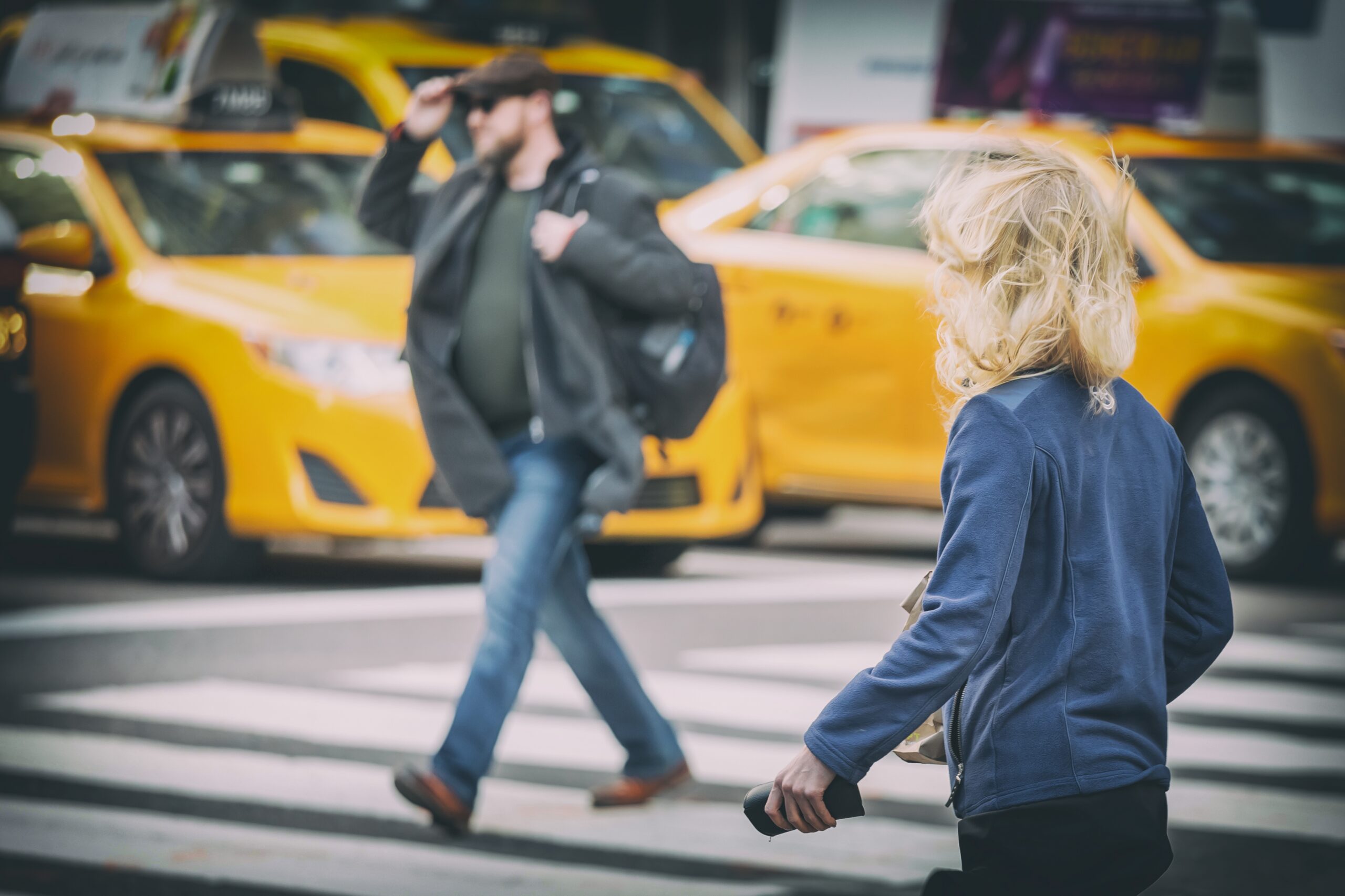
Pedestrian crossing safely at an urban intersection
Additionally, the infrastructure gap remains a major hazard. Roughly 65% of pedestrian fatalities happen in areas where there are no sidewalks. When walkers are forced to share the asphalt with fast-moving traffic, the margin for error disappears. This often leads to hit-and-run incidents where the driver flees to avoid responsibility.
Driver Responsibilities in Pedestrian-Heavy Zones
When you operate a motor vehicle, you are in control of a machine that can cause immense harm. Driver pedestrian laws require you to maintain a high level of vigilance, especially in urban centers and school zones. One of the most critical rules is the “no-pass” rule. If a car is stopped at a crosswalk, you must never pass it, as they are likely stopped for a pedestrian you cannot see.
Distraction is another leading cause of collisions. Taking your eyes off the road for even a few seconds to check a phone can result in a life-altering accident. Drivers must also be aware of the blind turns common in newer SUVs. The thick frames between the windshield and side windows can completely hide a person walking in a crosswalk during a left or right turn.
Speed is the ultimate factor in injury severity. A pedestrian hit at 20 mph has a 90% survival rate. However, that survival chance drops to 50% if the vehicle is traveling just 30 mph. Reducing your speed in neighborhoods and near parks is the single most effective way to prevent a fatal impact.
Pedestrian Responsibilities for Safe Crossing
Walkers must also play an active role in their own protection. While the law often favors the pedestrian, the laws of physics do not. If a sidewalk is available, it is generally required to use it. If you must walk on the road, always walk on the left side, facing traffic, so you can see oncoming cars.
Situational awareness is your best tool. “Distracted walking,” such as looking at a phone while crossing, can make you four times more likely to ignore traffic signals. Always wait for the “Walk” sign and never start crossing if the red hand is already flashing.
Predictability is also key. Always cross at intersections rather than darting out from between parked cars. Drivers cannot react to hazards they cannot anticipate. Being in a designated crossing area significantly strengthens your position if you need to establish crosswalk liability later.
The Rise of Large Vehicles: Why Height Matters
The shift toward SUVs and large pickups has fundamentally changed the nature of pedestrian injuries. Research from the Insurance Institute for Highway Safety (IIHS) found that vehicles with taller front ends are more likely to cause serious injuries at lower speeds. At 27 mph, a median-height pickup has an 83% chance of causing moderate injuries compared to 60% for a median-height car.
Taller vehicles strike a pedestrian’s torso or head rather than their legs. This results in more severe internal trauma and a higher likelihood of the pedestrian being pushed under the wheels rather than onto the hood. At Mike Slocumb Law Firm, we track these automotive trends to better hold negligent drivers and manufacturers accountable.
Contact Mike Slocumb Law Firm Today
If you or a loved one has been injured while walking, the insurance companies will often try to shift the blame to you. We won’t let that happen.
Contact Mike Slocumb Law Firm today for a free consultation, or call (888) 302-3669.
Our attorneys specialize in investigating roadway accidents and securing the maximum compensation for our clients.
Let us put the “Strong Arm” to work for your family.
Pedestrian Right-of-Way: Bottom Line
Roadway safety depends on a mutual commitment to obey the law and to show respect for every road user. While understanding your pedestrian right-of-way is vital, staying alert and visible is your best defense against tragedy. Trust the Mike Slocumb Law Firm to protect your future if an accident happens.
Pedestrian Safety Tips: FAQ
We frequently receive questions regarding pedestrian safety tips and the legal rights of those injured on the road. Here are five of the most common inquiries we address for our clients.
Can I still file a claim if I was hit while “jaywalking”?
Yes. Even if you were not in a crosswalk, drivers have a duty of care to avoid hitting you. Depending on the state’s negligence laws, you may still be entitled to significant compensation if the driver was speeding or distracted.
What should I do if the driver fled after hitting me?
Report the incident to the police immediately and try to locate any witnesses or nearby security cameras. You may be able to file an Uninsured Motorist claim through your own insurance policy to cover your medical expenses.
Are children held to the same safety standards as adults?
No. Courts recognize that children lack the cognitive development to judge speed and distance accurately. Drivers are held to a much higher standard of care when operating vehicles in school zones or residential areas.
How is fault determined if there were no witnesses?
Our legal team uses accident reconstruction experts, skid mark analysis, and vehicle “black box” data to determine exactly what happened. This forensic evidence is often key to proving the driver’s negligence.
Does vehicle design really impact my legal case?
Yes. If a driver was operating a vehicle with known visibility issues or a lethal front-end design, that information can be used to show they failed to exercise proper caution in a pedestrian-heavy zone.
About Our Law Firm
The Mike Slocumb Law Firm is a nationally recognized personal injury practice with a reputation for aggressive and effective advocacy. From our offices in Alabama, Georgia, D.C., and Virginia, we fight for those who have suffered life-altering injuries due to the negligence of others.