
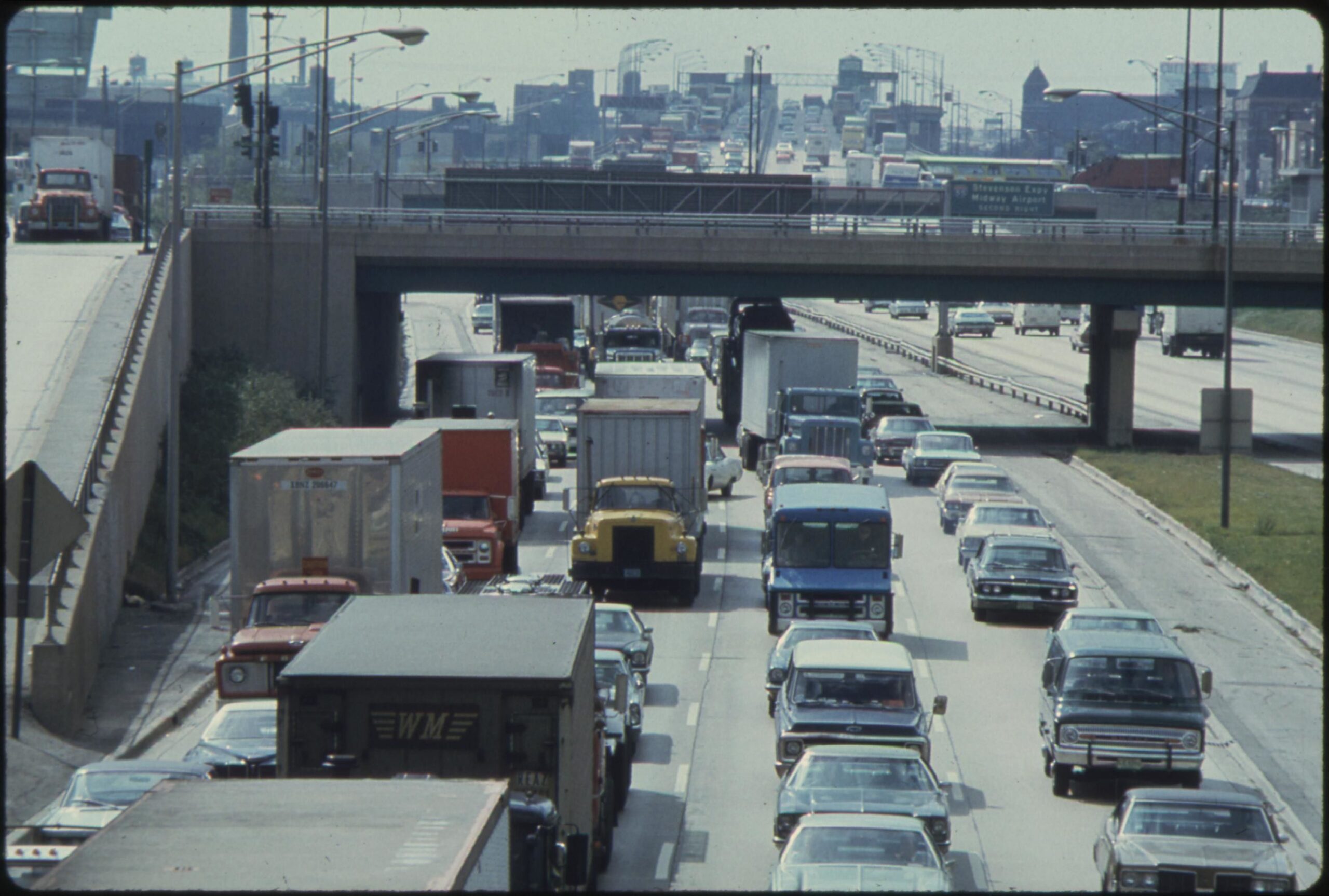
Chicago truck accidents are a serious risk on the stretch where I-90 and I-94 run together, carrying heavy freight and commuter traffic through several of the city’s major expressway interchanges. Here’s why it’s dangerous, what causes these crashes, and what injured people and grieving families should know about their legal options under Illinois law.
Key takeaways:
- I-90 and I-94 share about 15 miles of expressway through Chicago, mixing heavy freight and commuter traffic through several major merge points.
- Merging conflicts, congestion, and driver fatigue are recurring causes of truck crashes.
- Illinois treats wrongful death actions and survival actions as separate claims that compensate different losses.
- Illinois reserves punitive damages for aggravated misconduct, such as willful and wanton conduct. A plaintiff needs the court’s permission to seek them (735 ILCS 5/2-604.1), and separate statutes govern them in fatal cases (740 ILCS 180/1; 755 ILCS 5/27-6). They are not available against local public entities (745 ILCS 10/2-102) or, in fatal cases, against the State, local governments, or their employees acting in an official capacity.
What Makes the I-90/I-94 Corridor a High-Risk Zone for Commercial Trucks
I-90 and I-94 run together for about 15 miles through Chicago. The shared stretch begins where the Edens Expressway (I-94) meets the Kennedy Expressway near Montrose Avenue on the Northwest Side. It follows the Kennedy to the Jane Byrne Interchange (formerly the Circle Interchange) in the West Loop, then continues south on the Dan Ryan Expressway until I-90 splits off onto the Chicago Skyway on the South Side.
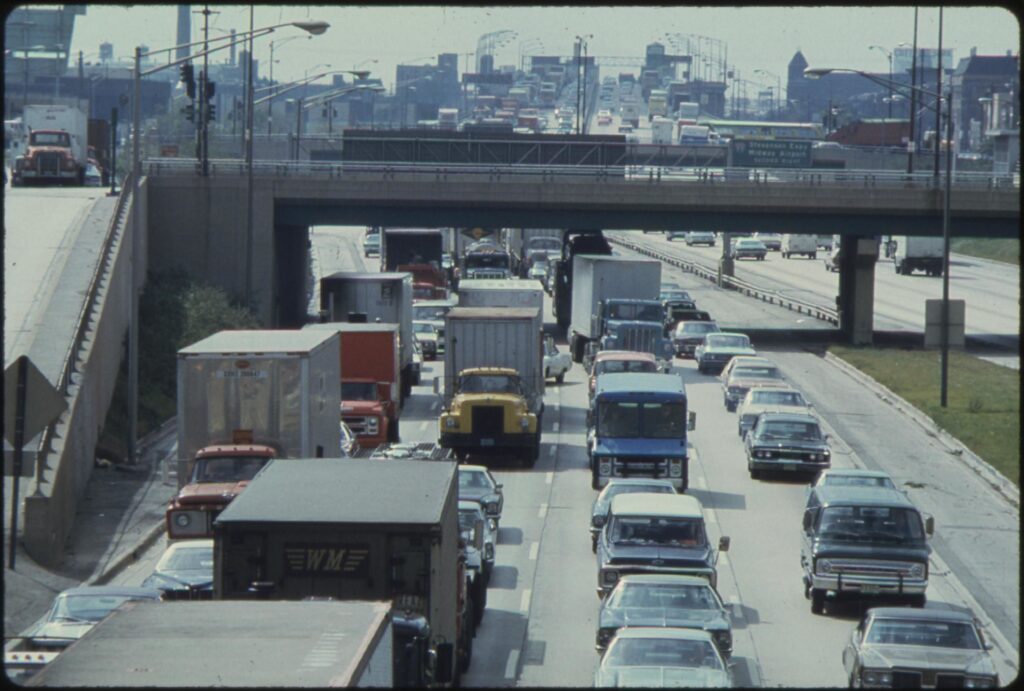
Rush-hour traffic on the Dan Ryan’s local and express lanes, part of the I-90/I-94 corridor where many Chicago truck accidents occur.
Along the way, long-haul semis and commuters share the same lanes, ramps, and merge points. The Kennedy has reversible express lanes between the Edens junction and Ohio Street, and the Dan Ryan divides into local and express lanes. Both layouts add lane changes at entry and exit points. Because a loaded truck is much heavier than a passenger car, it generally needs more distance to stop, so sudden slowdowns at these merge points can lead to severe rear-end and underride crashes. A Chicago truck accident attorney can help identify whether the driver, the carrier, the cargo loader, or another party caused your crash.
Common Causes of Chicago Truck Accidents: Merging Conflicts, Congestion, and Driver Fatigue
Merging conflicts. Trucks entering or exiting at the Jane Byrne Interchange, the Edens junction, or the Skyway split have limited room for maneuvers that require more space than a car. Crashes at these points often lead to disputes over who caused the collision.
Congestion. Stop-and-go traffic leaves little time to react, and a heavy truck cannot stop as quickly as a car when traffic ahead suddenly halts. The Jane Byrne Interchange once ranked as the nation’s worst truck bottleneck. Since its reconstruction, it has dropped out of the top 25 on the American Transportation Research Institute’s 2026 Top Truck Bottleneck List. The list’s new No. 1 bottleneck is also in the Chicago area, at the interchange of I-294 and I-290/I-88.
Driver fatigue. In the Large Truck Crash Causation Study, conducted by the Federal Motor Carrier Safety Administration (FMCSA) and the National Highway Traffic Safety Administration (NHTSA), truck driver fatigue was coded as an associated factor for 13 percent of the large trucks in the injury and fatal crashes studied. The study did not determine that fatigue caused those crashes. Federal drowsy driving guidance from OSHA, citing the National Institute for Occupational Safety and Health (NIOSH), estimates that 17 consecutive hours awake causes impairment similar to a blood alcohol content (BAC) of 0.05, and 24 hours awake causes impairment similar to a BAC of 0.10. For this reason, federal hours-of-service rules limit how long commercial drivers can drive. Hours-of-service and electronic logging device (ELD) records are often among the first records requested in a truck crash claim.
Life After a Chicago Expressway Truck Crash
Chicago truck accidents can leave you unable to drive or work for months. Lost income, rides to medical appointments, and added childcare costs build up over time and rarely appear on a single bill, which makes them easy for insurers to undervalue. Speak with an attorney before giving a statement to an insurance adjuster.
Economic and Non-Economic Damages
In a Chicago personal injury claim, economic damages include medical bills, future medical care, lost wages, lost earning capacity, and property damage. Non-economic damages include pain and suffering, loss of a normal life, disfigurement, and emotional distress. No fixed formula exists for non-economic damages; outcomes depend on injury severity, available insurance coverage, and the facts of each case.
Illinois Filing Deadlines and Comparative Fault
Illinois law sets strict filing deadlines for personal injury and wrongful death claims, and missing them can end your case. A wrongful death action, for example, generally must be filed within two years of the death (740 ILCS 180/2).
Claims against government bodies follow separate rules. Lawsuits against local public entities, such as the City of Chicago, are governed by Illinois’s Local Governmental and Governmental Employees Tort Immunity Act and generally must be filed within one year (745 ILCS 10/8-101(a)). Personal injury claims against the State require written notice to the Attorney General and the Clerk of the Court of Claims within one year, unless the claim itself is filed within that year (705 ILCS 505/22-1). The Kennedy and Dan Ryan are maintained by the Illinois Department of Transportation, so claims against the State, such as a roadway defect claim, generally go to the Illinois Court of Claims under the Court of Claims Act.
Illinois follows a modified comparative negligence rule. If you’re found more than 50 percent at fault, you recover nothing. At 50 percent or less, your compensation is reduced by your share of fault. This is why insurers often try to shift blame onto the injured driver.
Under Illinois law, violating a safety statute or administrative regulation designed to protect human life or property can be prima facie evidence of negligence. The injured person must still show that the violation caused the injury and that the rule was meant to protect people like them from that kind of harm.
Claims for Spouses and Families
If you were injured and survived, your spouse may bring a separate claim for loss of consortium, which covers the loss of companionship and support caused by your injuries.
Fatal cases work differently. Under the Illinois Wrongful Death Act, the personal representative of the deceased person’s estate brings a wrongful death claim for the benefit of the surviving spouse and next of kin. Recoverable damages include their financial losses and their grief, sorrow, and mental suffering.
Steps to Take After a Truck Accident on a Chicago Expressway
- Call 911 and get a medical evaluation, even if you feel fine. A prompt exam creates a record of your injuries from the start.
- Document the scene, including vehicle positions, skid marks, the truck’s USDOT number, and any shifted cargo.
- Get the trucking company’s name and carrier information, not just the driver’s insurance details.
- Avoid giving a recorded statement to any insurer before speaking with an attorney.
- Keep your medical bills and pay stubs, and preserve your vehicle before repairs.
- Contact a Chicago truck accident attorney promptly. Federal rules require carriers to keep hours-of-service records and supporting documents for only six months (49 CFR 395.8(k)(1)). Other evidence, such as dash-camera footage, isn’t covered by that rule and may be overwritten on the carrier’s schedule unless you send a preservation request.
Chicago Truck Accident FAQs: Fault, Deadlines, and Compensation
What if the trucking company blames me for the crash?
Under Illinois’s modified comparative negligence rule, you can still recover compensation as long as you were not more than 50 percent at fault, though your compensation is reduced by your share of fault. Trucking insurers often try to assign blame early, so avoid giving a recorded statement until you’ve spoken with a lawyer.
How long do I have to file a truck accident claim in Illinois?
Illinois law sets strict deadlines for both injury and wrongful death claims. Claims against the State or a local government body follow separate rules, including a one-year filing deadline for lawsuits against local public entities and a one-year notice requirement for injury claims against the State. Because the deadline that applies depends on the facts of your case, speak with an attorney as soon as possible.
What’s the difference between a wrongful death claim and a survival action?
A wrongful death claim is brought by the personal representative of the deceased person’s estate to recover the surviving spouse’s and next of kin’s own losses, such as lost financial support and grief. A survival action lets the estate recover what the deceased person could have claimed had they lived, such as pain and suffering, medical bills, and lost wages before death. The two claims are often filed together, but they cover different losses.
Can I recover punitive damages if a fatigued or impaired truck driver caused the crash?
Possibly, but punitive damages are reserved for aggravated misconduct, such as willful and wanton conduct, not ordinary carelessness. In Illinois injury cases, a complaint cannot request punitive damages at the outset. A plaintiff must file a pretrial motion and show the court a reasonable likelihood of proving at trial facts supporting the claim (735 ILCS 5/2-604.1).
Fatal cases follow additional rules. The Illinois Wrongful Death Act (740 ILCS 180/1; 740 ILCS 180/2), as amended in 2023, authorizes punitive damages, when applicable, for the benefit of the surviving spouse and next of kin. That change applies to actions filed on or after August 11, 2023. The Survival Act (755 ILCS 5/27-6) separately allows the deceased person’s estate to pursue punitive damages that person could have sought had they lived. Neither act allows punitive damages against the State, a unit of local government, or its employees acting in an official capacity, and the Tort Immunity Act separately bars punitive damages against local public entities (745 ILCS 10/2-102). An attorney can review whether your case qualifies.
How Mike Slocumb Law Firm Can Help
Chicago truck accidents often turn on records that the carrier controls, including ELD and hours-of-service logs, maintenance files, and driver qualification files. The sooner you request those records, the more likely they are to be preserved, and the statute of limitations keeps running while you recover.
If you were hurt or lost a family member in a truck crash on the Kennedy, the Dan Ryan, or another Chicago expressway, contact us at (888) 302-3669 or use our online contact form to request a free consultation.