
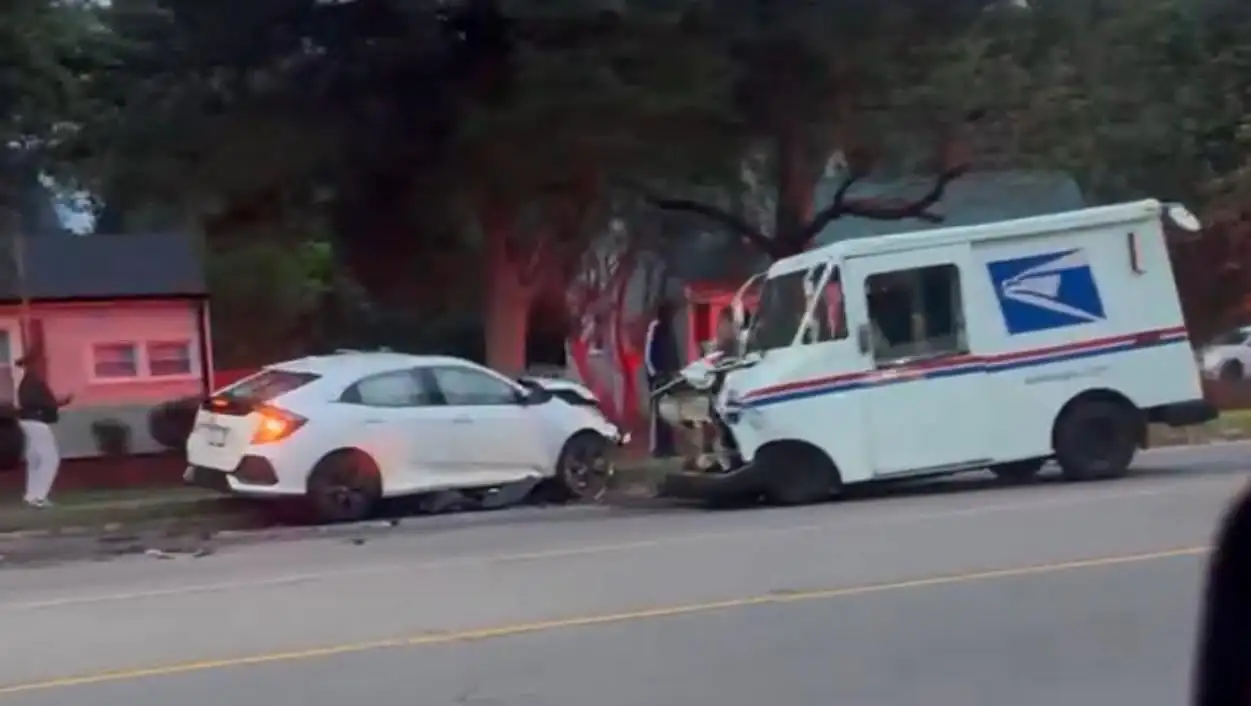
A federal vehicle crash follows a different process from an ordinary D.C. collision. When a USPS truck or another government-plated vehicle causes your crash, the claim follows a different process from an ordinary D.C. collision. You can’t sue the driver personally, and the claim goes to the federal agency, not a private insurer. The Federal Tort Claims Act (FTCA) is the path to compensation, and it comes with strict deadlines. Courts can extend them only in rare cases, through a doctrine called equitable tolling, so you should never count on an extension.
How the Federal Tort Claims Act Works
The FTCA is a limited waiver of the federal government’s immunity from lawsuits. It applies when a federal employee’s negligence causes injury while the employee is acting within the scope of federal employment. Three rules follow:
- The United States, not the driver, is the defendant. If the Attorney General certifies that the driver was acting within the scope of federal employment, the United States replaces the driver as the defendant.
- A judge decides the case. By statute, FTCA cases are tried without a jury.
- D.C. negligence law sets the liability standard, even though federal law controls how the claim is filed and processed.
Filing Deadlines for Federal Claims
A tort claim against the United States is barred unless it is presented in writing to the correct federal agency within two years after the claim accrues. If the agency denies the claim, you have six months from the date it mails the denial notice to file a lawsuit in federal court.
- The agency must receive your claim in time. A claim counts as filed when the agency receives it, not when you mail it.
- You have to file with the correct agency. A USPS crash goes to USPS. For any other vehicle, file the claim with the agency whose employee was driving. If you send a claim to the wrong agency, it should be forwarded, but it doesn’t count as filed until the correct agency receives it.
- The claim must state an exact dollar amount. Most claims are filed on Standard Form 95 (SF-95), and the claim must state a specific figure, called a “sum certain.” A claim without one is invalid.
- You can’t sue until the agency rules or six months pass. You can file suit once the agency denies your claim, or once six months pass without a decision. The Supreme Court has held that a lawsuit filed too early must be dismissed.
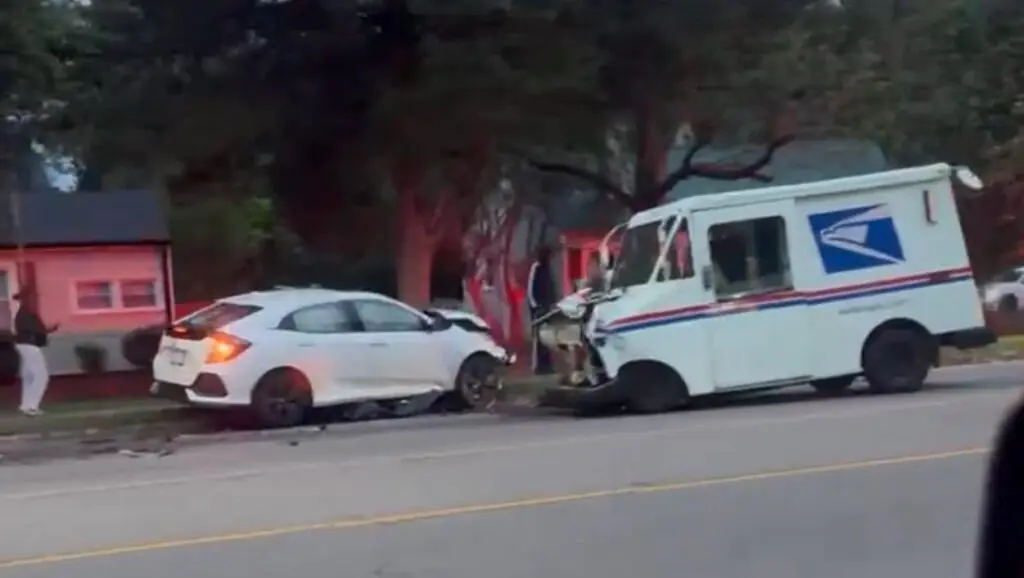
In a federal vehicle crash, the United States, not the postal worker, is usually the defendant.
What Evidence You Need After a Federal Vehicle Crash
- Photograph the government plate and agency markings at the scene. They help identify which agency receives your claim.
- Proof the driver was on duty and acting within the scope of federal employment at the time of the crash. The FTCA doesn’t apply otherwise.
- The Metropolitan Police Department (MPD) crash report, plus any internal incident report the federal agency prepared.
- Medical bills, wage-loss records, and repair estimates to support the sum certain on your SF-95.
- Independent witness contact information, collected early.
D.C.’s Contributory Negligence Rule Still Applies
The FTCA applies the negligence law of the place where the crash occurred, so D.C.’s own-fault rules govern. D.C. is one of the few U.S. jurisdictions that still applies contributory negligence to most vehicle collisions: any fault on your part can bar recovery entirely.
The D.C. Council carved out a narrower rule for pedestrians, cyclists, and other vulnerable road users under D.C. Code § 50-2204.52. They can still recover as long as their negligence is not greater than the combined negligence of all defendants. That exception does not cover a driver in a vehicle-to-vehicle crash, which is why early, thorough evidence matters.
Secondary Claims Tied to the Same Crash
A family member’s related personal injury claim, such as a spouse’s loss-of-consortium claim, should be filed on that person’s own SF-95, with its own sum certain, within the same two-year window. Courts have dismissed these claims when they weren’t presented separately.
What to Do Right Now
- Photograph the government plate, agency markings, and the driver’s federal ID if visible, before leaving the scene.
- Get evaluated by a physician right away, even for injuries that seem minor.
- Identify the federal agency whose employee was driving. That determines where you must file your SF-95.
- Don’t sign anything from a federal agency or accept an early settlement offer without legal review.
- File your SF-95 well before the two-year deadline.
Common Questions About Federal Vehicle Crashes in D.C.
Can I sue the federal employee who hit me? Generally, no. If the Attorney General certifies that the driver was acting within the scope of federal employment, the United States replaces the driver as the defendant, and the claim proceeds against the government.
How long do I have to file a claim? Your written claim must reach the correct federal agency within two years after the claim accrues. If the agency denies it, you have six months from the date it mails the denial notice to file suit. Courts can extend these deadlines only in rare cases.
What if the agency never responds to my claim? If the agency doesn’t decide your claim within six months of filing, you can treat that silence as a final denial and file suit in federal court.
Will a jury decide my case? No. By statute, FTCA cases are tried by a judge without a jury.
How much can I ask for? Your claim must state a specific dollar amount, called a sum certain. If the case later goes to court, you generally can’t ask for more than the amount stated in your claim, so document your damages before you file.
Does D.C.’s contributory negligence rule apply to my claim? Yes. The FTCA applies the negligence law of the place where the crash occurred, so D.C.’s rule applies: any fault on your part can bar recovery. Pedestrians, cyclists, and other vulnerable road users can still recover as long as their negligence is not greater than the combined negligence of all defendants.
Talk to a Firm That Files These Claims Correctly
Our Washington, D.C. car accident attorneys can help you identify the correct agency, document a sum certain, and track both the two-year filing deadline and the six-month deadline to sue after a denial.
If a federal vehicle caused your crash in Washington, D.C., contact us at (202) 759-7807.