
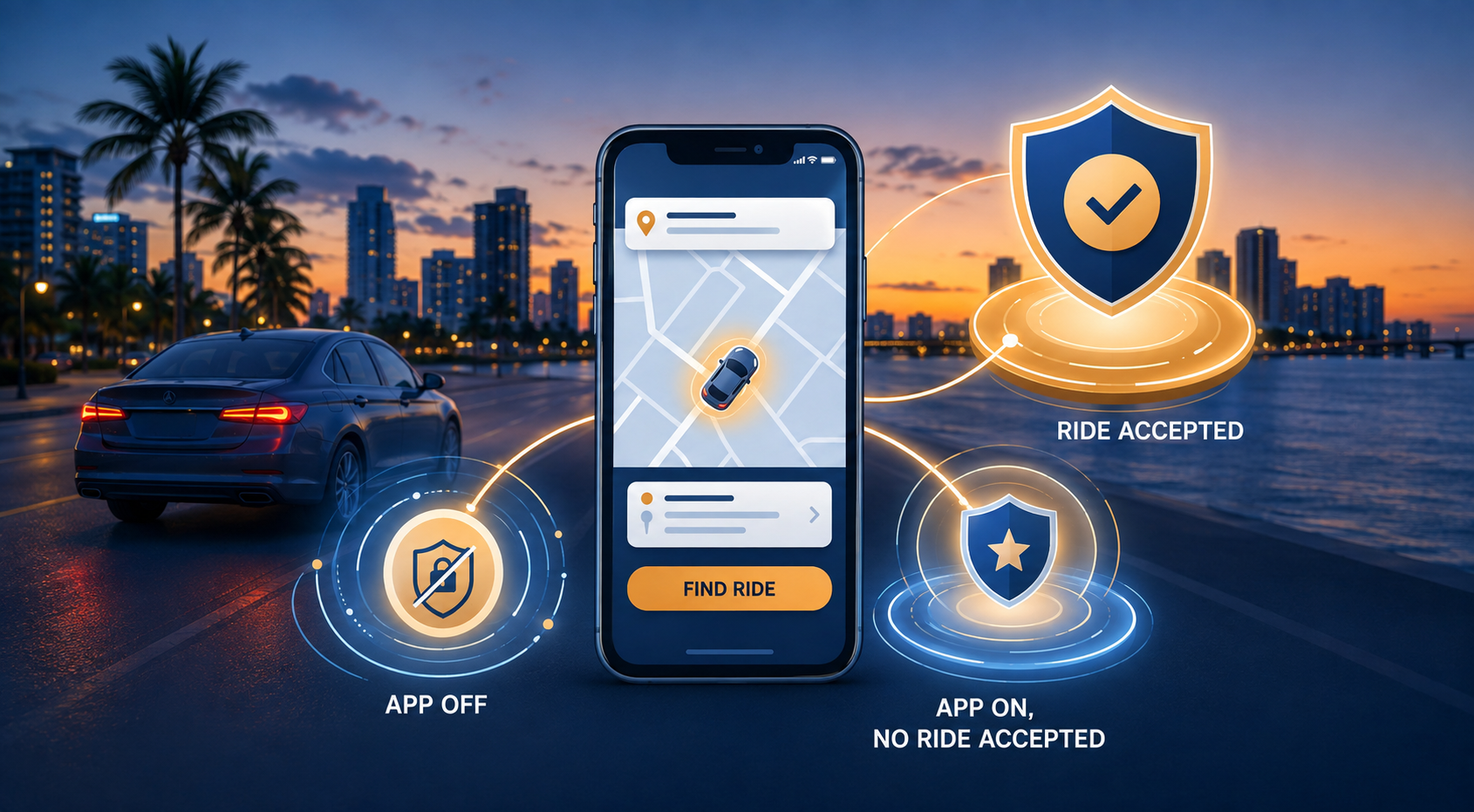
Florida law requires Uber and Lyft to carry a large liability insurance policy, but only during an actual ride, from the moment a driver accepts your trip until you’re dropped off. Before that, if the app is on but no ride has been accepted yet, the coverage is much smaller.
On top of that, that policy usually doesn’t pay your medical bills first. Instead, they go through Florida’s no-fault insurance system, often called PIP. PIP covers a portion of your medical costs and lost wages up to a set limit, but only if you get medical treatment soon after the crash. Wait too long, and you can lose that coverage completely, no matter who caused the accident.
That’s the real challenge behind most Fort Lauderdale rideshare claims: figuring out which insurance applies depends on exactly what the driver’s app was doing at the moment of the crash, not just on who seems responsible. That’s the kind of issue a Fort Lauderdale rideshare accident attorney sorts through before an insurance company tries to push your claim into a smaller coverage category. Here’s how the different layers of coverage work, when you can move beyond PIP to the rideshare company’s larger policy, and what passengers, drivers, and other drivers involved should each do differently.
Key Takeaways
- PIP pays first, no matter who caused the crash, but you need to get medical care quickly after the accident for it to apply.
- Uber and Lyft’s larger insurance policy only kicks in once a driver has accepted a ride; simply having the app open isn’t enough.
The 14-Day Deadline That Decides Everything
Fla. Stat. §627.736 sets the baseline: every registered vehicle must carry at least $10,000 in PIP, paid regardless of fault. The statute’s hard line is the 14-day treatment requirement; waiting longer to see a doctor is the single most common way injured riders lose access to benefits they were otherwise owed.
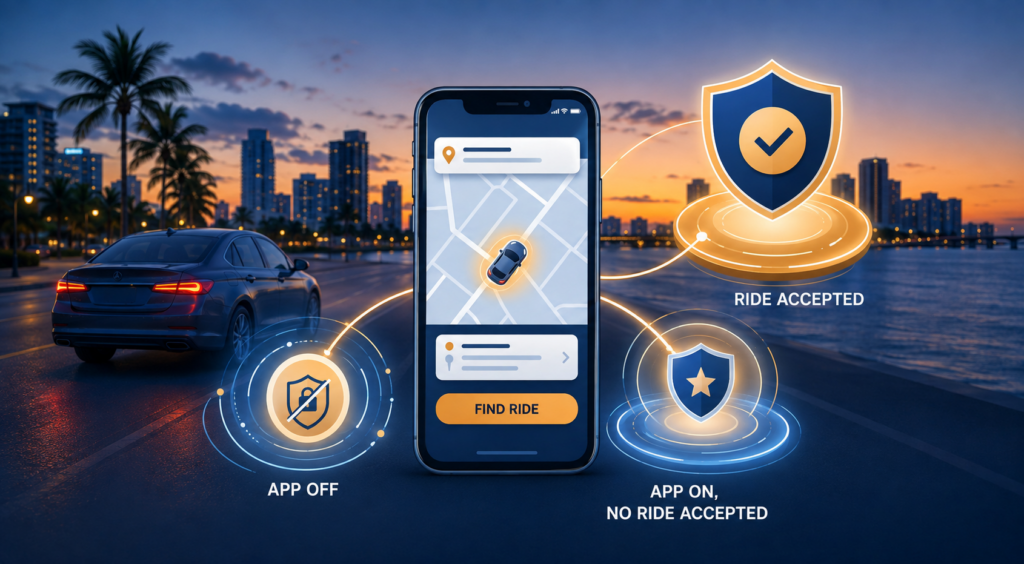
Rideshare insurance coverage tiers: app off, app on/no ride accepted, and ride accepted
Which PIP Policy Pays First
Rideshare trips complicate the “your own PIP pays first” rule because there’s more than one potential source:
- You own a car with PIP coverage; that policy pays first, whether you were a passenger, the rideshare driver, or a third party, regardless of whose trip you were on.
- You have no PIP policy of your own. Fla. Stat. §627.748 requires the rideshare company’s insurance to fill that gap during an active trip.
- You’re the rideshare driver; your coverage source depends on which app phase you were in: offline, waiting with the app on, or actively transporting a passenger. Each phase carries a different limit, which is why insurers pull trip logs and GPS timestamps before paying anything.
Once PIP Runs Out: Filing Against Uber or Lyft’s Insurer
Once PIP is exhausted, this is typically the point where a Fort Lauderdale rideshare accident lawyer gets involved, since pursuing the rideshare company’s commercial policy requires proving the injury meets Florida’s serious-injury threshold.
The Three Coverage Tiers Under Fla. Stat. §627.748
- App off: Nothing from Uber or Lyft. Only the driver’s personal auto policy applies.
- App on, no ride accepted: $50,000 per person / $100,000 per accident in bodily injury, plus $25,000 in property damage.
- Ride accepted through drop-off: Up to $1 million in liability coverage, the tier most serious-injury claims rely on.
Florida’s modified comparative negligence rule also bars recovery entirely if you’re found more than 50% at fault, which makes the app-phase determination doubly important; it decides both which policy applies and how fault gets argued.
What to Do Differently Depending on Your Role in the Crash
Your next move isn’t the same for everyone in the vehicle:
- Passengers: Screenshot your trip status (requested, en route, active) immediately; that data disappears from the app. See a doctor within 14 days regardless of how minor injuries feel.
- Rideshare drivers: Document your exact app phase at impact. Report to both your personal insurer and the TNC; reporting to only one can complicate which policy responds.
- Third parties (other drivers, cyclists, pedestrians): Get the rideshare vehicle’s plate and app name before it leaves the scene. File with your own PIP carrier first; preserve dashcam or witness footage since fault disputes are common once a corporate insurer is involved.
Caveat: These steps improve your position but don’t guarantee a specific outcome; coverage details can shift with new legislation, and only a case-specific review can confirm exactly what applies to your crash.
Why Fort Lauderdale Rideshare Accident Cases Get Contested So Often; And Why You Need a Lawyer
Fort Lauderdale’s airport traffic, beachfront corridor, and nightlife district generate a disproportionate volume of rideshare pickups and rideshare crashes. Corporate insurers routinely offer fast, low settlements before the full extent of an injury is known, and disputes over exactly which app phase a driver was in at impact are the most common way insurers try to shift a claim into a lower coverage tier. Our Fort Lauderdale personal injury attorneys handle this exact fact pattern regularly across Broward County.
Frequently Asked Questions
Does my own car insurance cover me if I’m hurt riding in an Uber or Lyft? Yes, in most cases, if you carry your own PIP policy, it applies first for initial medical bills even though you weren’t driving your own vehicle.
What if I don’t own a car or carry any auto insurance? Florida law still requires Uber and Lyft to provide PIP-equivalent benefits to riders and drivers injured during an active trip, even without a personal policy.
Can I sue Uber or Lyft directly? Rarely, as a direct suit against the company itself. TNCs structure their operations to limit direct liability, but their insurer becomes reachable once PIP is exhausted or your injury meets Florida’s serious-injury threshold.
How long do I have to file a claim after a Fort Lauderdale rideshare crash? There’s no single answer that applies to every case. Florida’s general negligence filing period runs two years under Fla. Stat. §95.11 for claims accruing after March 24, 2023, but the deadline can shift depending on factors like a minor’s involvement, a government entity or roadway being implicated, a death resulting from the crash (which starts its own clock from the date of death), or an incident predating the 2023 changes. Given how easily a case can fall into an exception, confirm the applicable deadline immediately through a case-specific review rather than a general rule.
Talk to Someone Who Untangles These Claims Every Day
Rideshare coverage disputes rarely resolve in a claimant’s favor without pushback; the tiered system is built to create exactly this kind of confusion. Our team can help determine which policy tier applies to your crash and what recovery is actually available. Learn more about our firm’s approach, then contact Mike Slocumb Law Firm today for a free case review.