
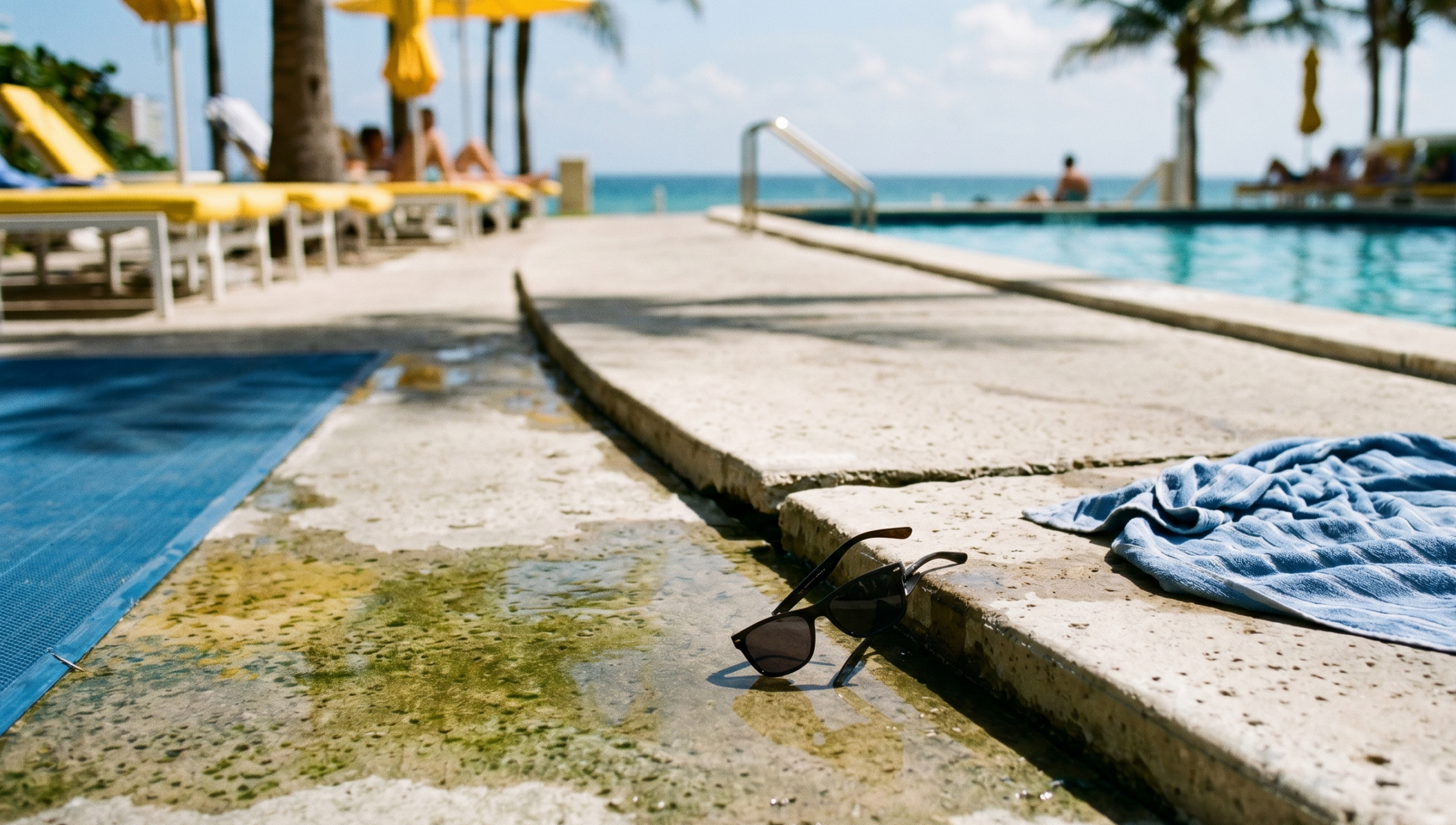
One moment you’re sipping a cocktail by the pool. Next, you’re limping through an emergency room with a shattered ankle and a ruined vacation.
For thousands of out-of-state visitors injured at Fort Lauderdale resorts every year, a trip and fall accident doesn’t just hurt; it shatters the entire purpose of being there. Filing a trip and fall lawsuit in Fort Lauderdale may be your only path to recovering what you’ve lost. Medical bills arrive at home. Pain persists. And the most frustrating question remains unanswered: Who’s legally responsible?
If this is you, this guide answers that question straight. No jargon. No waiting. Just the legal facts a vacation injury victim actually needs to know.
Understanding Resort Duty of Care for Out-of-State Visitors
Here’s what changes everything: Florida law doesn’t treat out-of-state visitors differently. Under Florida Statute § 768.0755, resorts owe you the same legal duty of care they owe local residents. You didn’t fly 1,000 miles only to lose your legal rights at check-in.
Our Fort Lauderdale Slip and Fall legal team specializes in vacation injury claims. We know the unique challenges out-of-state visitors face and how to fight for your recovery.
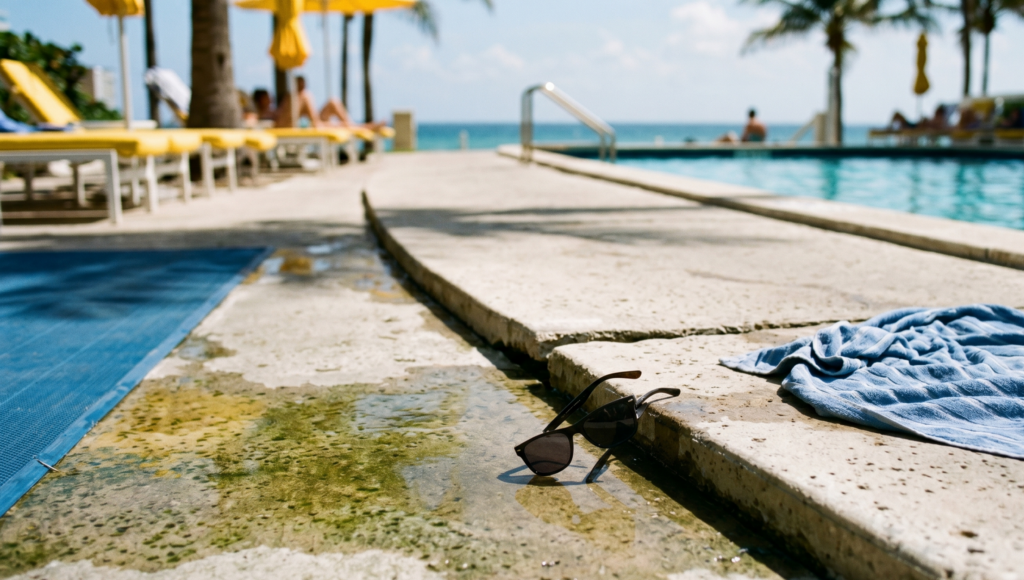
Slip and fall hazard at a resort pool: cracked and mossy concrete walkway next to water.
What This Duty Actually Means in Practice
A resort’s duty of care requires regular inspections, immediate repairs or hazard warnings, proper maintenance, adequate lighting, and clear warning signs. The legal standard is simple: resorts must act as a responsible property owner would.
A sidewalk cracked for months without repair? Negligence. A slippery pool deck without a wet floor sign? Negligence. The resort can’t ignore obvious hazards just because they’re “open and obvious,” especially when the hazard is unusually dangerous or caused by the resort’s own failure to maintain the property.
Why Resorts Try the “You Should Have Seen It” Defense (And Why Courts Reject It)
Resorts frequently claim: “The hazard was obvious; you should have noticed it and avoided it.” Florida courts have repeatedly rejected this argument. A visible pothole doesn’t automatically mean the resort escapes liability. What matters is whether the hazard was unreasonably dangerous and whether the resort should have known about it, repaired it, or warned you.
Action Step: Document what you observed at the moment of your fall. Photograph the exact hazard immediately after your injury (within 24 hours, before weather or maintenance changes the scene). This evidence becomes critical when challenging the “obvious hazard” defense.
Trip-and-fall accidents at Fort Lauderdale resorts cluster around specific danger zones. Understanding these helps you recognize negligence.
Uneven Walkways: Concrete settles, roots push up, repairs are deferred, resulting in uneven surfaces that catch your toe. Fort Lauderdale’s sandy, shifting soil foundation makes this worse. Walkways that appear safe can develop sudden drops or raised edges within months. Red flags include gaps between slabs larger than ¼ inch, raised or sunken sections in frequently traveled areas, temporary fixes instead of permanent solutions, and no maintenance logs.
Poolside Hazards: Wet surfaces, sloped concrete, and proximity to water create ideal conditions for serious injuries. A slip on a pool deck can result in head injuries, spinal trauma, or drowning. Common negligence includes missing anti-slip coatings, inadequate drainage, lack of warning signs, poor lighting, and failure to remove algae or debris.
Under federal ADA accessibility standards, pool decks must feature slip-resistant surfaces and adequate clear space to prevent accidents. When resorts fail to meet these requirements, whether due to missing non-slip surfaces, poor maintenance, or insufficient deck spacing, they breach both accessibility obligations and general safety duties. Photograph the exact spot immediately, note weather conditions, and document witnesses.
Hot Tubs and Spa Decks: Humid environments breed mold and algae, creating slippery surfaces that guests expect to be clean. When resorts fail to maintain these zones, liability is often clear.
Injured at a Fort Lauderdale resort? If you’re considering a trip and fall lawsuit in Fort Lauderdale, contact our team for a free consultation
Filing a Trip and Fall Lawsuit in Fort Lauderdale: What Out-of-State Visitors Must Know
As an out-of-state visitor, you don’t need to be a Florida resident to pursue a claim, but you must navigate Florida’s specific legal requirements.
Report the Incident Immediately: Tell resort management right away and request an incident report. Get the names and contact information of whoever documents your injury. Request a copy before leaving the resort (you have a right to request it). Photograph the hazard from multiple angles within 24 hours of weather or maintenance changes that could alter the scene.
Preserve Evidence: Before leaving Fort Lauderdale, gather medical documentation, witness contact information, the resort’s incident report, photographs/video of the hazard, and all medical bills. Don’t return home and handle the legal side later; evidence degrades, and witnesses scatter.
Consult a Fort Lauderdale Attorney: Florida’s four-year statute of limitations gives you time, but don’t wait. Resort surveillance deletes after 30-90 days. Your attorney will preserve critical evidence, evaluate your claim based on injury severity and medical costs, negotiate with resort insurance companies, and determine if mediation or trial is best.
Understand Comparative Fault: Under Florida Statute § 768.81, if you were partially responsible for your injury, your recovery is proportionally reduced, but you can still recover if you’re 50% or less at fault. If you’re found to be greater than 50% at fault, you’re barred from recovering any damages. This means a resort arguing you were “running in flip-flops on a wet surface” must prove you bore more than half the fault to escape liability entirely. Detailed documentation matters; your attorney will argue the resort’s negligence was the primary cause, even if you share some responsibility.
Navigating Florida’s Legal Process as a Non-Resident
You Don’t Need to Be in Florida to File: Modern litigation happens digitally. Your attorney handles depositions via video, exchanges documents electronically, and keeps you informed remotely. You may need to return for trial, but that’s typically months or years away after evidence review and settlement negotiations.
Expect Quick Settlement Offers: Resort insurance companies contact you within days with low offers, betting you’re in pain and want a resolution. A trip and fall with high medical costs, lost wages, or ongoing pain deserves more than a quick payout.
Your Claim Value: Don’t settle based on guesswork. Your claim should reflect medical costs (including future treatment), lost income from vacation and work time, pain and suffering proportional to injury severity, and reduced life enjoyment if lasting effects exist. A Fort Lauderdale attorney ensures proper calculation before any settlement.
Moving Forward After a Resort Injury
A trip-and-fall accident at a Fort Lauderdale resort isn’t just physical injury; it’s a disruption of a restorative experience. You deserved a safe environment. When resort negligence takes that away, holding them accountable signals that maintenance, safety, and guest welfare matter.
If you’ve been injured in a trip or fall at a Fort Lauderdale resort, contact Mike Slocumb Law Firm today for a free, confidential consultation. We understand the unique challenges out-of-state visitors face and are ready to fight for the compensation you deserve.