
Every time the calendar turns, the safety landscape on our roads shifts significantly. Understanding seasonal driving hazards is the first step to ensuring you and your family arrive at your destination safely, no matter the weather. From the first freeze to the peak of summer heat, your vehicle and your driving habits must adapt to the environment to prevent life-altering collisions.
At Mike Slocumb Law Firm, we have seen how quickly a commute can turn into a crisis due to changing road conditions. If you have questions about your rights after a weather-related incident, contact our legal team today for a free virtual consultation, or call (888) 302-3669. For an in-person visit, browse our law office locations near you.
Safe Driving Tips: Key Takeaways
- Prepare for winter by clearing all snow from your vehicle and checking your battery health to avoid being stranded in freezing temperatures.
- Focus on hydroplaning prevention by slowing down during spring rains and ensuring your tire treads are deep enough to channel water away.
- Stay extra vigilant during the summer months when highway construction and inexperienced teen drivers are most active on the roads.
Winter Driving Risks: Black Ice and Poor Visibility
Winter is often the most stressful season for drivers because of freezing temperatures and unpredictable precipitation. According to the Federal Highway Administration (FHWA), more than 1,300 people are killed, and over 116,000 are injured in vehicle crashes on snowy, slushy, or icy pavement annually. These statistics highlight the critical need for heightened awareness during the colder months.
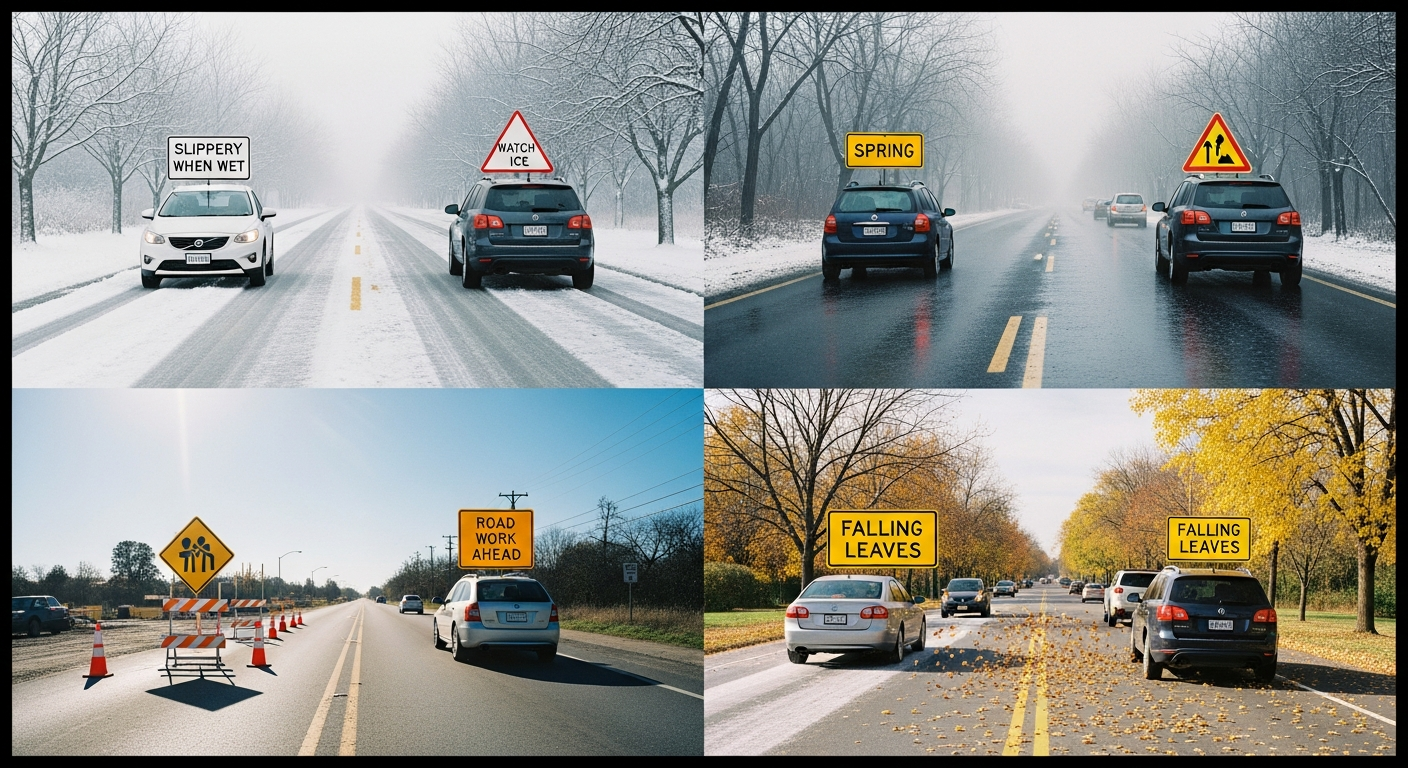
Seasonal driving hazards are shown across winter, spring, summer, and fall road conditions.
One of the most dangerous seasonal driving hazards is black ice. This is a transparent coating of ice that blends in with the asphalt, making it nearly invisible to the naked eye. To practice proper winter driving safety, always treat bridges and overpasses with extra caution. These structures lose heat from both the top and bottom, causing them to freeze much faster than regular ground-level pavement.
Visibility is another major hurdle during the winter months. Heavy snow can create whiteout conditions where you lose your sense of direction entirely. It is vital to keep your headlights on and ensure your windshield is completely clear before you start driving. Taking the time to brush snow off your car’s roof is also a critical courtesy. This prevents “ice missiles” from sliding off and blinding the driver behind you.
Spring Dangers: Heavy Rain and Hydroplaning
As the ice melts, spring brings a high risk of wet-pavement accidents. The National Highway Traffic Safety Administration (NHTSA) reports that damp pavement contributes to nearly 74% of all weather-related fatalities. This makes rain a primary concern for seasonal safety. The first few rains of spring are especially slick because the water mixes with oil and grease that have built up on the roads over the winter.
When water separates your tires from the road, it results in a loss of steering control known as hydroplaning. Effective hydroplaning prevention starts with maintaining healthy tire tread and slowing down immediately when a downpour begins.
If you feel your vehicle starting to slide, gently lift your foot off the accelerator. Do not slam on the brakes, as this can cause you to lose total control. Instead, keep the steering wheel straight until you feel the tires regain their grip on the pavement. Checking your tire pressure is also essential, as under-inflated tires are much more likely to lift off the road surface in standing water.
Summer Risks: Traffic Congestion and Heat-Related Issues
Summer may seem like the easiest time to drive, but it often sees the highest traffic volume. The period between Memorial Day and Labor Day is famously called the “100 Deadliest Days” for teen drivers. Data from AAA indicates that an average of 8 people are killed every day in crashes involving a teen driver during these summer months.
The heat also takes a toll on your vehicle. High temperatures cause the air inside your tires to expand, which can lead to a blowout if your tires are old or damaged. Heat can also cause your engine to overheat, especially if you are stuck in heavy vacation traffic.
To stay safe, always check your coolant levels and tire pressure before heading out on a long trip. Increased construction during the summer months means you will likely encounter lane changes and sudden stops. Patience is one of the best safe driving tips we can offer. Rushing through a construction zone increases the risk of a rear-end collision or a tragic accident involving road workers.
Fall Hazards: Leaves and Animal Collisions
Fall is a beautiful time for a drive, but the changing foliage creates unique seasonal driving hazards. Wet leaves on the road are as slippery as ice. They can significantly reduce your traction, making it harder to stop or turn. Leaves can also hide deep potholes or road markings, leading to unexpected bumps or lane drifts.
This is also the peak season for deer activity. Most deer-vehicle collisions happen in the fall during their mating and migration season. These animals are most active at dawn and dusk, when visibility is lowest.
If a deer jumps in front of your car, the best move is to brake firmly and stay in your lane. Swerving to avoid an animal often leads to a much worse accident, such as hitting a tree or another car. Keep your dashboard lights dimmed to help your eyes stay adjusted to the dark road ahead.
The “Time Change” Trap: Drowsy Driving
When we “fall back” and lose daylight in the autumn, our internal clocks often struggle to adjust. This transition can lead to a spike in drowsy driving incidents. Fatigue slows your reaction time just as much as alcohol does, making it difficult to respond to sudden hazards.
The early sunset also means more of your daily commute will happen in the dark. Glare from oncoming headlights can be more intense when you are tired. To stay safe, make sure you get plenty of rest after a time change and avoid driving long distances during the hours you would usually be asleep.
Regional Micro-Climates: Expect the Unexpected
Depending on where you live, you might face sudden changes in weather within a tiny area. For example, a drive through a valley might be clear, but as you climb a hill, you could hit a thick bank of fog or a sudden patch of snow.
These microclimates require you to be constantly alert. If you see clouds or mist ahead, slow down before you enter the area. Being proactive rather than reactive is the key to staying safe when the weather is unpredictable. Always keep a safe distance from the car ahead of you so you have room to react to sudden changes in visibility.
Year-Round Safe Driving Practices
While each season has its own risks, some habits will protect you all year long. Maintenance is the foundation of safety. Regularly checking your brakes, lights, and wipers ensures that your car is ready for whatever the sky throws at you.
Distraction is another year-round threat. No matter the season, a cell phone or a complicated GPS can take your eyes off the road at the worst possible moment. By committing to focused, sober driving, you significantly lower your risk of being involved in a crash. We encourage every driver to treat the road with respect and stay up to date on the latest safe driving tips.
Contact Mike Slocumb Law Firm Today
If you or a loved one has been injured in an accident caused by another driver’s negligence, you deserve a legal team that understands the challenges of weather-related claims.
Contact Mike Slocumb Law Firm today for a free in-person or virtual consultation. Call (888) 302-3669. We are here to help you secure the compensation you need for medical bills and lost wages.
Winter Driving Safety: Bottom Line
Prioritizing winter driving safety and seasonal awareness is a responsibility we all share. By adjusting your habits to the environment, you protect your future and the lives of those around you. Trusting in preparation and remaining alert are the best ways to ensure every trip ends safely at home.
Seasonal Driving Hazards: FAQ
Understanding seasonal driving hazards and the legal rules that follow an accident is essential for every driver. Here are five of the most common questions regarding road safety and liability.
- Is it true that bridges freeze before the rest of the road? Yes. Because cold air circulates both above and below a bridge, it loses heat faster than the road on the ground. Always slow down when approaching bridges during near-freezing weather.
- What should I do if my car starts to hydroplane? Gently ease your foot off the gas pedal to slow down. Do not hit the brakes or turn the wheel sharply. Wait for the tires to make contact with the road again before you resume steering.
- Am I liable if I hit a patch of ice and slide into another car? In many cases, yes. Drivers are expected to maintain control of their vehicles and adjust their speed to the conditions. Even if you were going the speed limit, it might have been “too fast for the conditions.”
- Why is summer considered one of the most dangerous seasons? Summer sees more travelers, more road construction, and more teen drivers on the road. These factors combined lead to a higher frequency of fatal accidents compared to other seasons.
- When should I call a lawyer after a weather-related crash? You should contact a lawyer as soon as everyone is safe. Evidence such as road conditions or witness statements can disappear quickly when the weather changes, so early documentation is vital. You can find more details on our legal practice areas page.
About the Firm
Mike Slocumb Law Firm is a premier personal injury firm dedicated to helping accident victims nationwide. With law office locations in Alabama, Georgia, Washington D.C., and beyond, we have recovered over $500 million for our clients. Our attorneys are known for their “tough-minded” approach and their commitment to holding negligent parties accountable. You can learn more about our experience and team on our About Us page.