
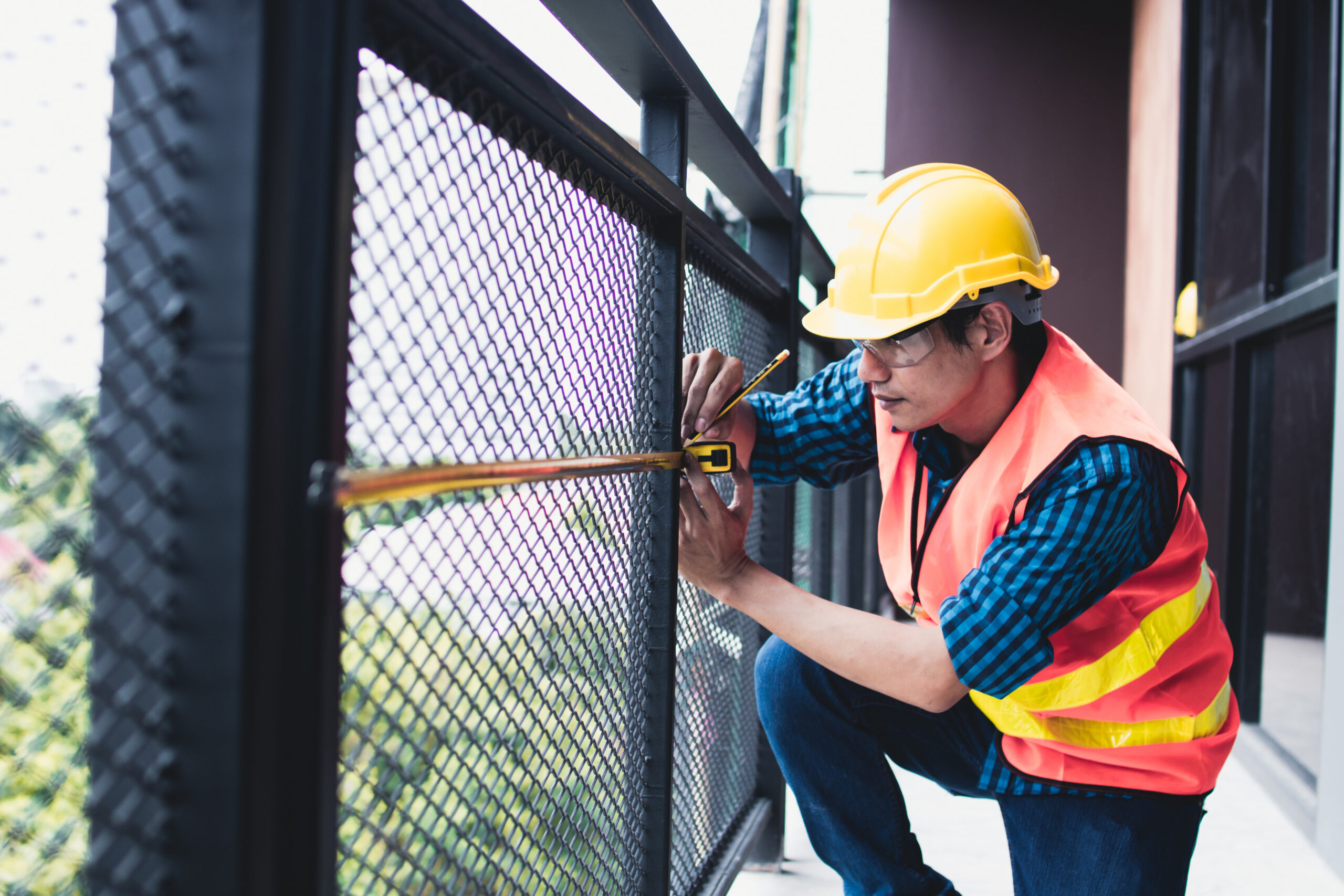
If you or a loved one sustained severe injuries due to a balcony collapse or railing failure, understanding Texas safety standards for apartment balconies and proving negligence in a fall is essential to securing financial recovery.
Texas premises liability laws require landlords and multi-family property managers to maintain structural elements in a reasonably safe condition.
When building codes are ignored, property owners can be held legally accountable for the resulting medical bills, lost wages, and long-term rehabilitation costs – this is where a premises liability or slip and fall attorney in Texas can help.
Texas Building Codes and Guardrail Requirements
Apartment complexes and multi-family housing developments in Texas are governed by rigorous structural mandates designed to mitigate fall hazards. Unlike single-family homes that fall under the International Residential Code (IRC) with a 36-inch height baseline, apartment buildings and commercial residential properties are bound by the International Building Code (IBC) standards adopted statewide.
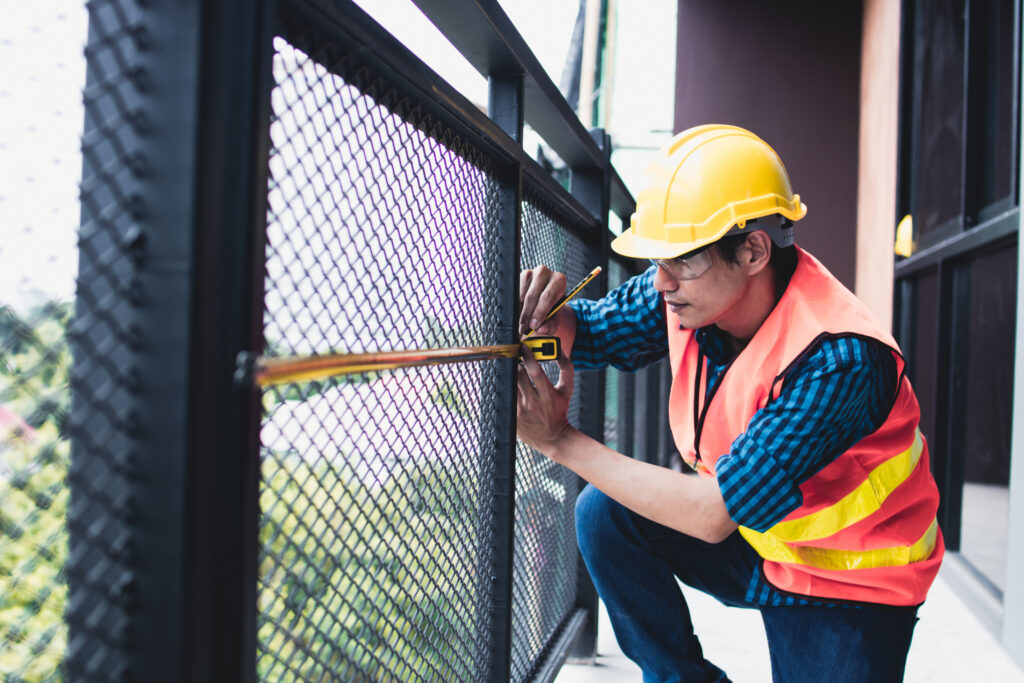
Close-up of a building inspector measuring the structural safety metrics and guardrail requirements of a multi-family apartment balcony.
Key structural safety metrics include:
- The 42-Inch Height Requirement: Under standard IBC provisions, commonly incorporated into local municipal ordinances across Texas, guardrails on commercial multi-family balconies with a walking surface elevated more than 30 inches above the ground must be at least 42 inches high.
- The 4-Inch Sphere Rule: To protect from slipping through gaps, horizontal or vertical intermediate balusters must be spaced closely together. The opening must be narrow enough to prevent a 4-inch diameter sphere from passing through any section of the railing.
- Structural Load Thresholds: Balcony guardrail systems must be engineered to withstand a concentrated structural load of at least 200 pounds applied at any point along the top rail, as well as a linear load of 50 pounds per linear foot, without suffering catastrophic failure or dangerous deflection.
While the original draft referenced Texas Health and Safety Code section 791.012, that statute specifically outlines the state’s technical specifications for exterior stairway fire escapes. For general apartment balconies, local building departments enforce the uniform codes mentioned above.
Establishing Fault: Actual vs. Constructive Knowledge
To successfully recover damages in a Texas premises liability lawsuit, an injured plaintiff must demonstrate that the property owner knew, or legally should have known, about the dangerous balcony condition. Texas courts divide this burden of proof into two distinct categories:
Actual Knowledge
This means the landlord, property manager, or maintenance staff had documented awareness of the hazard prior to the accident. Actual knowledge can be substantiated through archived resident repair requests, written correspondence, internal email communications, or a history of previous structural failures in the same apartment community.
Constructive Knowledge
Even if a landlord claims complete ignorance of a defective railing, they can be held liable under the doctrine of constructive knowledge. This legal framework establishes that a hazardous condition existed for a sufficient length of time that a property owner exercising ordinary care should have discovered and corrected it during a routine inspection. Under Texas common law, property owners cannot escape liability simply by failing to inspect their premises.
Design Defects vs. Deferred Maintenance
Balcony failures generally stem from one of two legally actionable theories:
Design or Installation Defects
A design defect implies the balcony structure was unsafe from the day it was constructed. This includes anchoring errors, structural under-engineering, or the use of materials that failed to meet the mandatory load-bearing requirements of the building code at the time of installation. These cases are established through blueprints, city permitting records, and forensic engineering analysis.
Poor or Deferred Maintenance
A maintenance defect occurs when a balcony was structurally sound at the time of installation but deteriorated over time. Environmental stressors, such as intense Texas heat and heavy seasonal rainfall, accelerate the degradation of structural elements. Examples include wood rot, severe rust oxidation on steel supports, and loosened anchoring bolts. Landlords are legally required to address these issues before they lead to a catastrophic failure.
Structural Integrity Analysis and Evidence Gathering
Building an undeniable chain of liability requires gathering objective, unassailable evidence immediately following an incident. A comprehensive legal investigation typically involves:
- Retaining structural engineering experts to measure anchoring depths and test metal or wood degradation timelines.
- Reviewing municipal code compliance documentation and historical building inspection reports.
- Subpoenaing internal apartment maintenance logs and property management communication archives.
- Documenting the scene via time-stamped photographs and video footage before the property management changes or repairs the structural hazard.
Impact of Texas Modified Comparative Negligence Law
Property insurance companies routinely attempt to shift blame onto the victim by claiming the resident was acting recklessly or leaning over the guardrail.
Texas operates under a modified comparative negligence system pursuant to Texas Civil Practice and Remedies Code section 33.001.
Under this statute, an injured individual can still recover financial damages as long as their own percentage of responsibility does not exceed 50%. If a jury determines that the victim was partially at fault, the overall financial recovery is reduced by that exact percentage.
For example, if total damages are assessed at $300,000 but the plaintiff is found to be 20% responsible for their conduct, the final recoverable judgment is reduced to $240,000.
However, if the plaintiff’s fault is deemed to be 51% or higher, they are legally barred from recovering any compensation under Texas law.
Seeking Legal Representation in Texas
Navigating the complexities of Texas building codes, engineering reports, and insurance carrier tactics requires strategic legal advocacy.
If you have questions about your options or the structural rules governing your apartment complex in Texas, we are here to provide clear guidance.
Contact Mike Slocumb Law Firm today for a free case evaluation, or call us anytime: 888-302-3669.
At Mike Slocumb Law Firm, we focus on holding negligent commercial property owners accountable when their failure to maintain basic safety standards leads to severe, life-altering injuries. Our legal team understands how to uncover the documentation needed to prove constructive knowledge and protect your rights through every stage of a premises liability claim.
Legal Disclaimer
The information provided in this article is for general educational and informational purposes only and does not constitute formal legal advice. Reading, reviewing, or interacting with this content does not create an attorney-client relationship between the reader and Mike Slocumb Law Firm. Premises liability laws and municipal building codes can be different based on your situation and are subject to change